
mean hand
this site is set in mean hand, a typeface by anna zhang.
mean hand is built from 814,255 handwritten characters collected by the u.s. government in the early 1990s to automate census form processing. the samples came from census bureau employees and high school students in bethesda, maryland. this data became nist special database 19, later adapted into the emnist dataset: a benchmark used to train and evaluate handwriting recognition systems, shaping what counts as legible.
each letter is constructed by stacking thousands of samples and applying a threshold: a mark appears only if that proportion of samples placed ink there. this threshold determines the weight.
at black, 1 in 20 samples is sufficient — letters accumulate nearly every variation, becoming dense and difficult to read. at regular, 1 in 3 samples must agree, producing forms that are readable but belong to no individual hand. at thin, 3 in 4 samples must align; very little survives.
at both extremes the type is illegible: overwhelmed by variation at one end, reduced to fragments at the other. legibility emerges only within a narrow threshold. but even there, what resembles handwriting was written by no one.
weights
thin · 100 — 3 in 4 samples must agree
abcdefghijklmnopqrstuvwxyz 0123456789
extralight · 200 — 1 in 2 samples must agree
abcdefghijklmnopqrstuvwxyz 0123456789
regular · 400 — 1 in 3 samples must agree
abcdefghijklmnopqrstuvwxyz 0123456789
bold · 700 — ~1 in 7 samples must agree
abcdefghijklmnopqrstuvwxyz 0123456789
extrabold · 800 — 1 in 10 samples must agree
abcdefghijklmnopqrstuvwxyz 0123456789
specimen
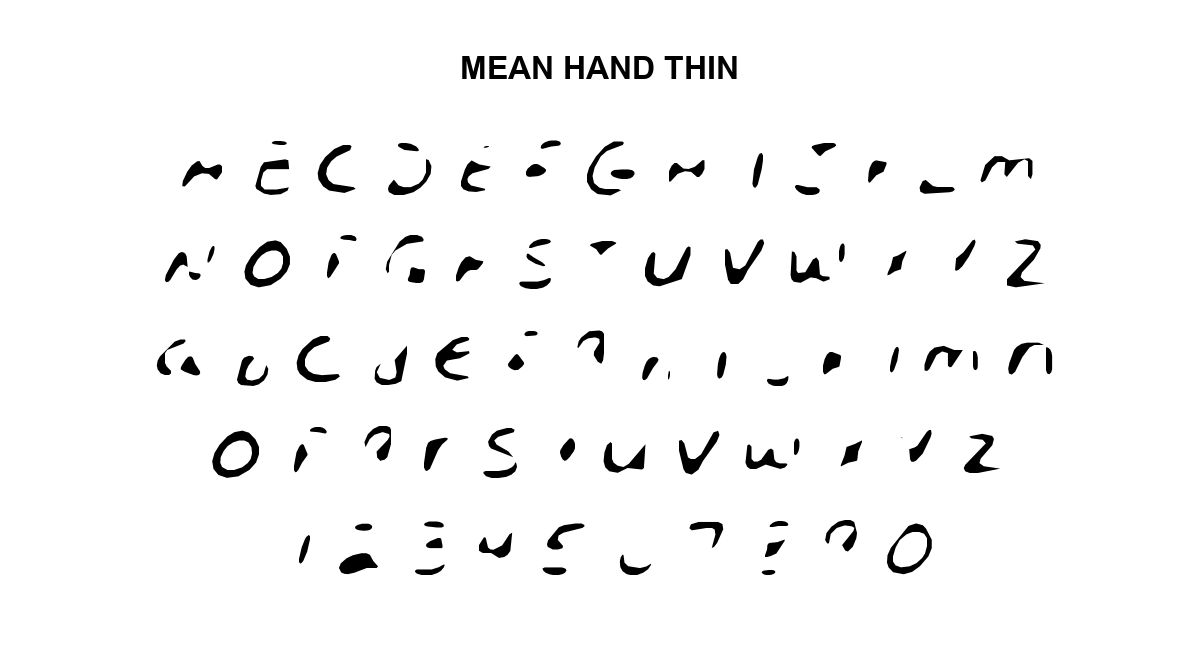
thin · 100
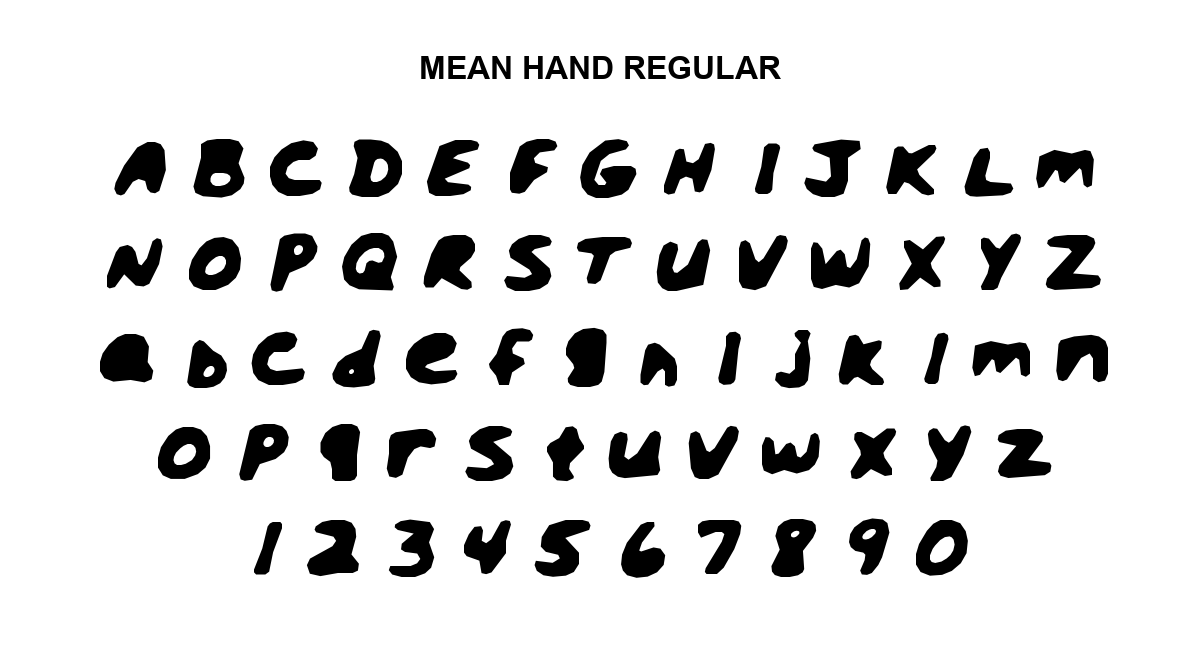
regular · 400
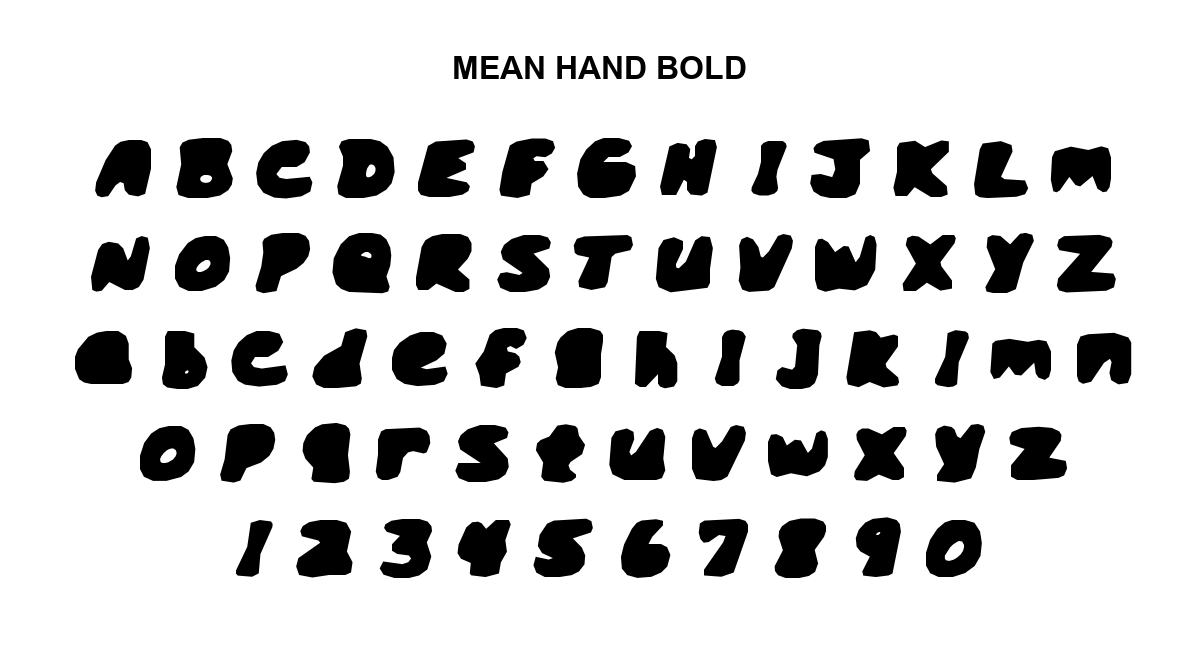
bold · 700
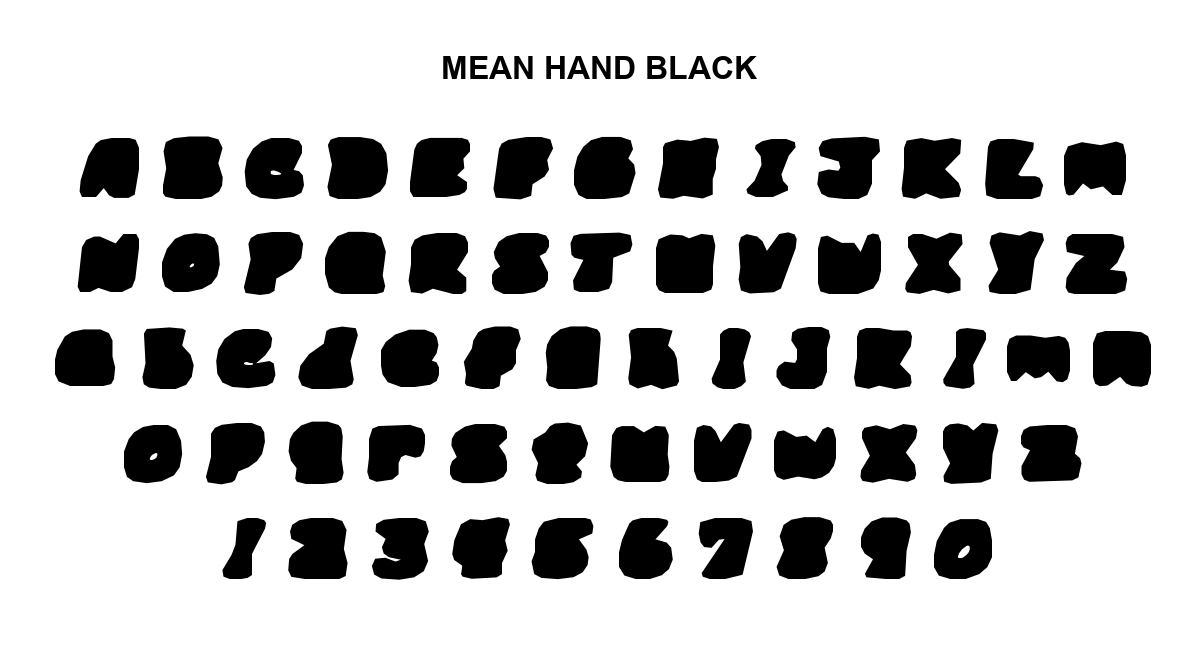
black · 900
links
- download mean hand (free) — metalabel
- project page — anna zhang portfolio
- emnist dataset — nist
mean hand © 2026 anna zhang
licensed under the sil open font license, version 1.1